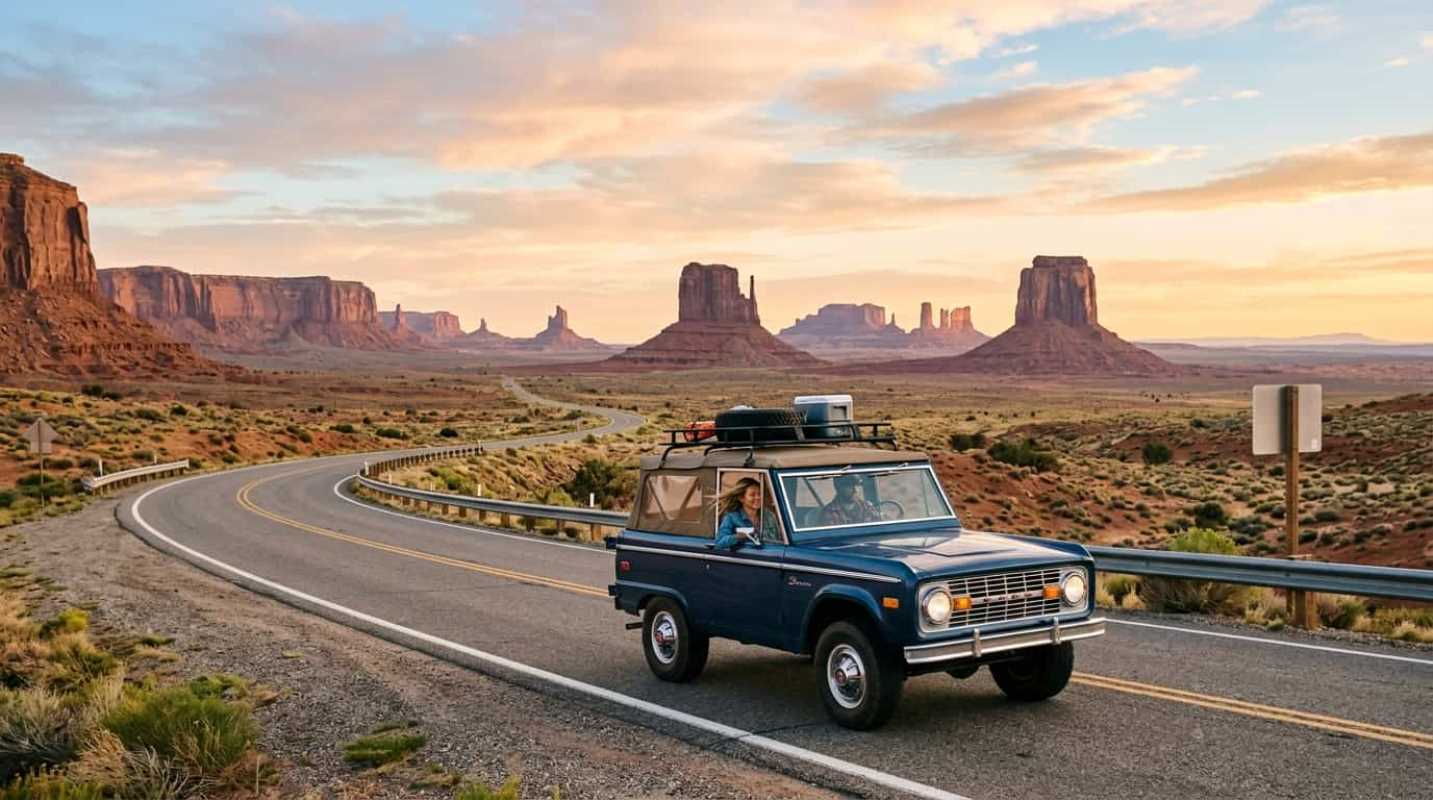
There is something incredible about throwing a bag in the trunk, starting the engine, and watching your hometown fade in the rearview mirror. We are living in a massive road trip resurgence. With air travel becoming a stressful, expensive headache, more of us are choosing to explore on four wheels.¹ In fact, a massive portion of travelers are bypassing airport security entirely to reclaim the freedom of the highway.²
Think of it as the ultimate way to actually see the country instead of just flying over it. The United States has an incredibly diverse mix of terrain. You can drive through misty redwood forests in the morning and find yourself winding past sun-bleached desert cliffs by sunset.
Have you ever wanted to just drive without a destination in mind? That feeling of pure independence is hard to match. Let's look at the absolute best routes you should map out this year.
Pacific Coast Highway: The Gold Standard of Coastal Cruising
If you want drama, the Pacific Coast Highway is your route. It is roughly 600 miles of pure, cliff-clinging excitement along California's iconic coast. You get the crashing waves of the Pacific on one side and towering coastal mountains on the other.
Start your journey in San Francisco and head south toward San Diego. You will want to take your time through Monterey, where you can grab a clam chowder and watch the sea otters. Further south, you will hit Big Sur. Crossing the famous Bixby Creek Bridge feels like driving straight into a movie scene. Don't forget to stop at McWay Falls, where a waterfall drops directly onto a sandy beach.
As you keep heading south, make time for Hearst Castle in San Simeon. It is a wild, sprawling mansion built by a media tycoon that feels completely out of place in the best way possible. Finally, wind your way through the upscale beach towns of Santa Barbara and Malibu before hitting Los Angeles.
But a drive this dramatic requires some planning. Winter storms regularly cause mudslides that shut down major sections of the highway for months at a time. To get the best weather and avoid the dreaded "June Gloom" fog, aim for late spring or early autumn. You will get clearer skies and fewer camper vans blocking your view.
Route 66: Reliving the Main Street of America
Maybe you want a dose of pure, unadulterated nostalgia. In that case, you need to point your wheels toward Route 66. It is the ultimate slice of Americana, stretching over 2,400 miles from Chicago all the way to the Santa Monica Pier.
This route is basically a living museum of mid-century travel. You will find neon-lit retro diners, vintage gas stations, and some of the strangest roadside attractions on the planet.
Here are a few places you absolutely cannot miss:
• Cadillac Ranch: A quirky art installation in Texas where ten half-buried cars stand nose-down in the dirt.
• The Blue Whale of Catoosa: A massive, waterfront iron-and-steel whale in Oklahoma that defines vintage roadside charm.
• Midpoint Cafe: A classic spot in Adrian, Texas, where you can grab a slice of pie at the exact geographical center of the route.
• Petrified Forest National Park: A stunning stretch of colorful fossilized wood and painted desert in Arizona.
When should you go? Do yourself a huge favor and avoid the dead of summer. Driving through the Mojave Desert in July is a brutal test of your car's air conditioning. Stick to May or September for comfortable temperatures and open roads.
Blue Ridge Parkway: A Masterclass in Appalachian Beauty
If the desert heat sounds exhausting, let's head east. The Blue Ridge Parkway is a completely different speed. Connecting Shenandoah National Park in Virginia to the Great Smoky Mountains in North Carolina, this 469-mile stretch has zero stoplights. None.
It is designed for slow, relaxed cruising. The speed limit rarely tops 45 miles per hour, which is perfect because you will want to stare at the endless ridges of the Appalachian Mountains.
Start your trip on Skyline Drive in Virginia before transitioning onto the parkway. Along the way, you will drive over the Linn Cove Viaduct. This engineering marvel hugs the side of Grandfather Mountain without damaging the fragile environment below.
This drive is a dream for outdoor lovers. You can pull over at random trailheads for quick hikes, or stop in mountain towns like Asheville to check out the local craft breweries and art galleries.
But there is a catch. If you visit in October, you will be sharing the road with thousands of other travelers looking for peak autumn foliage. The colors are spectacular, but you must prepare for slow-moving traffic and booked-up motels. If you want a quieter drive, late spring offers beautiful wildflowers and empty overlooks.
Practical Tips for Your Road Trip Adventures
Before you turn the key, let's talk logistics. Road tripping in 2026 is a bit different than it used to be. With fuel prices fluctuating, a little preparation goes a long way.
First, give your car a thorough checkup. This means checking your tire tread, testing the battery, and changing the oil. If you are heading into steep mountain territory, make sure your brakes are up to the task.
Second, be aware of the major national park reservation shakeup. If you are planning to visit the big parks, there is some great news. Several of the most popular parks, including Yosemite, Glacier, Arches, and Mount Rainier, have discontinued their general timed-entry vehicle reservation systems.
But there are still exceptions:
• Rocky Mountain National Park: Still requires timed-entry permits from late May through mid-October.
• Acadia National Park: Requires vehicle reservations for Cadillac Summit Road.
• Haleakala National Park: Requires reservations for sunrise viewing.
• Carlsbad Caverns: Requires reservations for cave entry.
To make things easier, buy the America the Beautiful Interagency Pass for 80 dollars. It grants unlimited access to all federal recreation sites and national parks for a full year, paying for itself in just three park visits.
Third, download the right apps before you lose cell service:
• GasBuddy: This is needed for bypassing expensive gas stations right outside national park entrances. A quick search can save you serious cash just by driving 15 miles down the road.
• A Better Routeplanner: If you are driving an electric vehicle, this app is a lifesaver for mapping out reliable charging stops.
• PlugShare: Another great tool to confirm your overnight hotels actually have working chargers.
Finally, leave room for spontaneity. The best road trip moments are almost always the ones you did not plan. If you see a sign for a weird museum or a scenic overlook, pull over. That is the whole point of driving.
Start Your Engines
In a world where we rush from one destination to the next at 30,000 feet, a road trip forces you to slow down. It reminds you that the journey is just as interesting as the destination.
So, what is holding you back? Grab a map, pack a cooler to save some cash, and pick a direction.³ The open road is waiting for you.
Sources:
1. travelalliancepartnership.com
https://travelalliancepartnership.com/five-road-trip-trends/
2. roadrunnerautotransport.com
https://www.roadrunnerautotransport.com/news/2974/the-great-escape-why-americans-are-reclaiming-the-road-in-summer-2025
3. abta.com
https://www.abta.com/americas-top-road-trips-scenic-drives-and-bucket-list-routes