Have you ever stared at a photo of a lion lounging in the golden grass and thought, "I need to do that"? You are not alone. Planning an African safari is a bucket-list dream for many, but it often feels like trying to assemble a puzzle with missing pieces. Between seasons, park fees, and accommodation styles, it is easy to get overwhelmed.
But here is the truth: your safari dreams are much closer than you think. The trick is starting early. If you want to secure the best locations, you need to plan ahead. Think of it like booking front-row tickets to the greatest show on Earth. A safari is an investment in once-in-a-lifetime memories, and getting the details right is worth every bit of effort.
Timing Your Trip and Navigating Wildlife Viewing Seasons
So how do you decide when to go? It all comes down to water. In Africa, water dictates where the animals go, which means it dictates what you will see.
During the dry season, which usually runs from May to October, the bush dries up, and animals gather around the remaining water sources. This makes game viewing much easier. On the flip side, the green season from November to April brings rain, lush vegetation, and baby animals. It is beautiful and often cheaper, but the thick plants can make spotting wildlife a bit of a treasure hunt.
Here is a quick look at the top destinations to help you match your timing with the wildlife spectacles you want to see.
• Serengeti National Park (Tanzania): If you want to see the Great Migration, timing is everything. From June to September, you can witness dramatic river crossings in the north. From January to March, the southern Serengeti becomes a nursery during the calving season, drawing plenty of predators.¹
• Maasai Mara National Reserve (Kenya): The Great Migration arrives here from July to October. Over a million wildebeest and zebras flood the reserve, which also has one of the highest concentrations of big cats in Africa.
• Okavango Delta (Botswana): In a cool twist of nature, this massive oasis floods during Botswana's dry winter. From June to October, water from the Angolan highlands fills the delta, making it the perfect time for water-based safaris in traditional canoes.
• Chobe National Park (Botswana): Go between July and October to see massive elephant herds. Chobe has around 120,000 elephants, and they gather along the riverfront during the dry months.
• South Luangwa National Park (Zambia): From June to October, the Luangwa River dries up, making it the perfect time for walking safaris. This is where you go to track leopards and lions on foot.
Choosing Your Base with Lodge vs. Camping Options
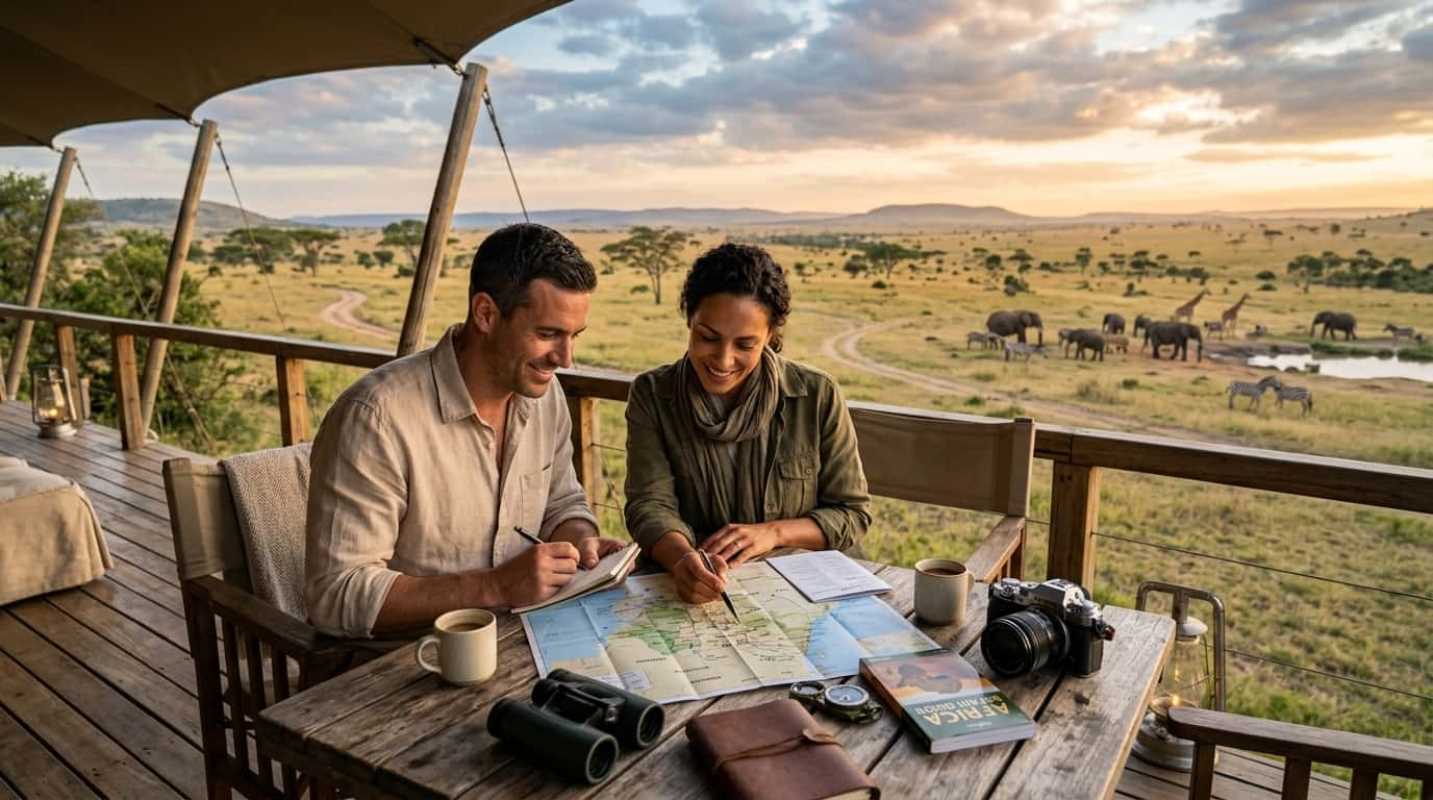
Once you know where and when you are going, you have to decide where to sleep. In places like Botswana, this usually comes down to two very different styles: permanent luxury lodges or mobile camping. Which one fits your personality?
• Luxury Safari Lodges: These are permanent, beautiful structures made of stone and wood. You get private plunge pools, air conditioning, Wi-Fi, and fine dining. It is a secure, comfortable environment where you are insulated from the elements. But this comfort comes with a steep price tag, often ranging from $1,000 to $3,000 USD per person, per night.²
• Mobile Camping Safaris: This is a modern, high-end take on the classic expedition. A professional crew travels ahead of you to set up camp in private, unfenced sites deep in the wild. You sleep in large walk-in canvas tents with real beds, use bucket showers, and listen to the sounds of the night with only a layer of canvas between you and the wild. There is no Wi-Fi, but the connection to nature is unmatched. It is also much friendlier on the wallet, typically costing between $350 and $800 USD per night.²
The Logistics of Understanding Conservation Park Fees
Let's talk about the money you pay just to enter the parks. It is easy to look at these fees as an annoying extra cost, but they are actually the financial backbone of wildlife protection. Your fees directly fund anti-poaching patrols, habitat management, and local community projects.
In Tanzania, these fees are a significant part of your budget. Entering the Serengeti costs $70 to $80 USD per day, and a single descent into the Ngorongoro Crater costs $295 USD per vehicle. For a while, the government required these fees to go directly to the central treasury, which delayed funding for park operations. But in May 2025, the government made a major policy shift, allowing the park authorities to retain their revenue directly.³ This means your money now goes straight to the rangers and conservation officers on the ground. Even better, they have frozen these fees through March 2026 to keep prices stable for travelers.³
Botswana has seen a similar transformation. For twenty years, its park fees did not change, leaving the wildlife department underfunded. In 2022, they partnered with the UN's Biodiversity Finance Initiative (BIOFIN) to modernize their fees. The result was immediate, tripling their revenue in the first year and securing key funding for conservation. The government planned another fee increase for April 2026, but they recently delayed it after listening to feedback from safari operators who wanted to protect pre-booked travelers. This collaborative approach make sures that conservation stays funded without making travel planning a headache.
Expert Tips for a Seamless Safari Experience
Planning a safari is exciting, but a few practical tips can save you a lot of stress once you are on the ground.
• Pack light and stick to neutrals: Most bush planes have strict weight limits, often around 33 pounds, and require soft-sided bags. Leave the bright colors at home. Stick to khaki, green, and beige to blend into the environment and avoid attracting tsetse flies.
• Trust your guides: A great guide is the most important part of your safari. They are master trackers, biologists, and hosts all in one. Always book through ethical operators who pay fair wages and support local communities.
• Get your medical prep done early: Talk to a travel clinic months before your trip. You will likely need malaria medication, and some countries require a yellow fever vaccination certificate to enter.
Turning Your Itinerary into Reality
So what is the next step? Don't let the planning process paralyze you. Start by picking your top wildlife spectacle, whether that is the Great Migration or the flooded Okavango Delta. Once you have your timing locked in, choose the accommodation style that fits your vibe.
Remember, your travel spend is doing real good on the ground. Every park fee you pay and every local guide you hire helps keep these wild spaces protected for generations to come. Book with confidence, embrace the adventure, and get ready for a trip that will change the way you see the world.
Sources:
1. 15 Best African Safari Destinations 2025 Expert Guide
https://bornparkadventures.com/15-best-african-safari-destinations-2025-expert-guide/
2. Mobile Camping vs Luxury Lodges Botswana
https://travelafricamore.com/mobile-camping-vs-luxury-lodges-botswana/
3. TANAPA Update
https://www.youtube.com/watch?v=dsxZsJGhMpI