Imagine standing on a black sand beach while frozen chunks of a glacier drift past you into the open ocean. On your left, steam rises from a volcanic vent. On your right, a massive waterfall thunders down a cliff. This is the daily reality in Iceland, a place where the earth feels alive and constantly in motion. For anyone looking to escape predictable tourist traps, this island offers something entirely different. It's a wild, untamed corner of the world where nature still calls the shots. Whether you want to hunt the Northern Lights or soak in warm geothermal waters, Iceland is ready to change how you view the planet.
Planning a trip here can feel a bit a lot because there's simply so much to see. How do you fit active volcanoes, massive glaciers, and hidden hot springs into one trip? Let's break down exactly how to plan your perfect adventure.
Mastering the Ring Road Itinerary
The best way to experience the sheer variety of this country is by driving Route 1, widely known as the Ring Road.¹ This paved loop stretches 1,322 kilometers (820 miles) around the entire island.¹ Although you might see people online claiming they did it in five days, please don't rush it. You need a minimum of seven to ten days to actually enjoy the journey without spending your entire vacation staring through a windshield.
To make the most of your time, a counter-clockwise route is usually the best approach. Here is a highly efficient eight-day itinerary that hits the absolute best spots.
1. Day 1: Arrival and The Golden Circle. Pick up your rental car at Keflavík Airport and head straight for the classic sights. You'll see the continental plates pulling apart at Þingvellir, the erupting Strokkur Geysir, and the massive Gullfoss Waterfall.
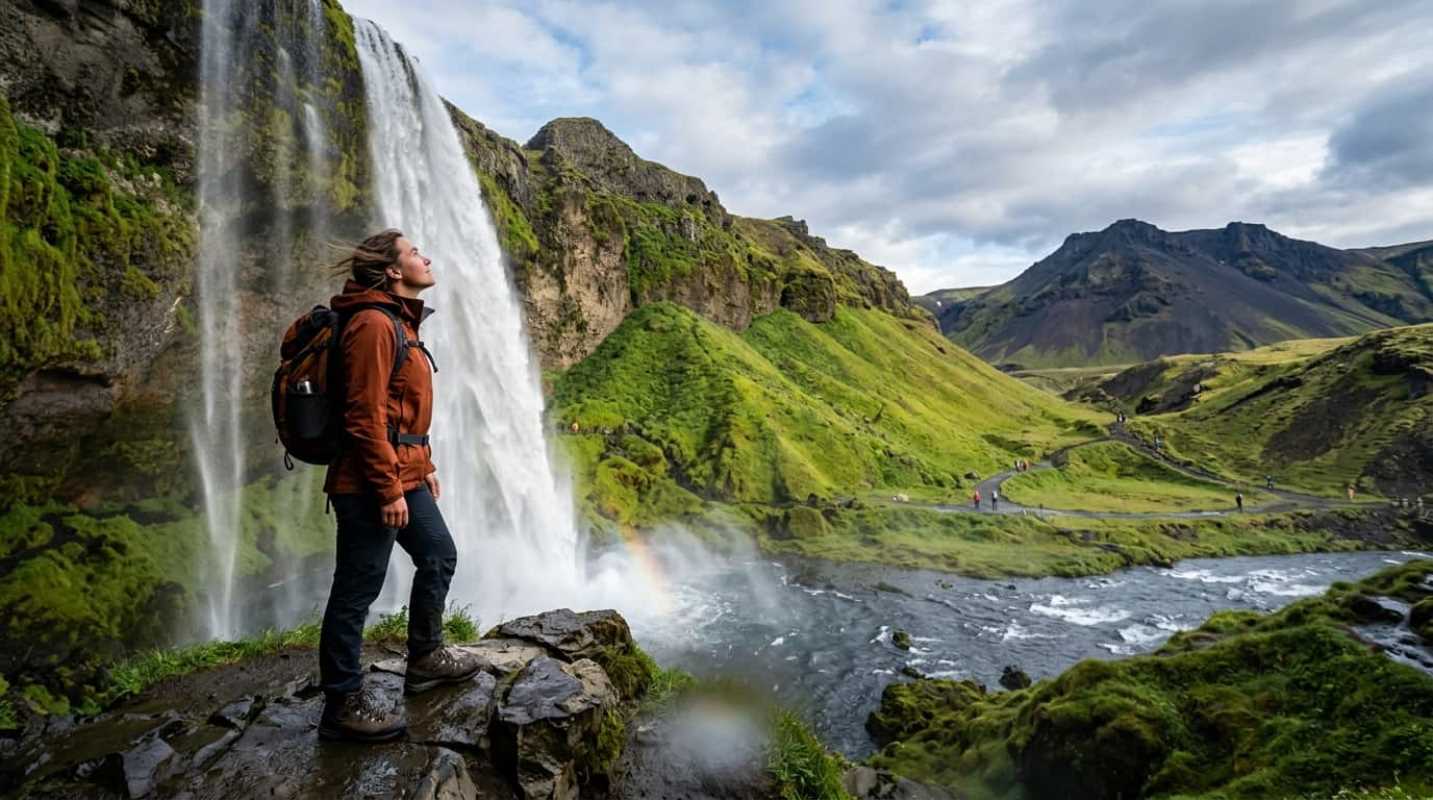
2. Day 2: The South Coast and Black Sand Beaches. Drive past towering cliffs to walk behind Seljalandsfoss and marvel at the giant drop of Skógafoss. End your day at Reynisfjara Black Sand Beach near Vík, but keep a safe distance from the shoreline because the sneaker waves here are incredibly dangerous.
3. Day 3: Glaciers and Floating Ice. Head east to the Jökulsárlón Glacier Lagoon. Watching massive blue icebergs drift out to sea is a surreal experience. Don't forget to cross the road to Diamond Beach, where these ice chunks wash up on the dark sand.
4. Day 4: The East Fjords. Drive through the quiet, dramatic fjords of the east coast. Take a break in the creative village of Seyðisfjörður and hike down to the basalt pillars of Stuðlagil Canyon.
5. Day 5: Lake Mývatn Geothermal Area. This northern region feels like another planet. Explore the bubbling mud pools of Hverir and the lava ruins of Dimmuborgir before washing off the trail dust in the local warm pools.
6. Day 6: North Iceland and Whales. Stop at Goðafoss, the Waterfall of the Gods, on your way to Akureyri. If you love wildlife, head up to Húsavík, which is widely considered the whale-watching capital of the country.
7. Day 7: West Iceland and Snæfellsnes Peninsula. Drive west to a peninsula often called Iceland in miniature. You can photograph the famous Kirkjufell Mountain and visit the lonely black church at Búðakirkja.
8. Day 8: Return to Reykjavík. Head back to the capital for some city exploration, see the iconic Hallgrímskirkja church, and catch your flight home.
To keep yourself safe on the road, always check safetravel.is and road.is before you start driving each morning. The weather here can change from clear skies to a blinding blizzard in a matter of minutes. Also, remember that F-roads, which are the unpaved mountain tracks in the highlands, are strictly off-limits for two-wheel-drive cars. If you want to explore those areas, you must rent a proper four-wheel-drive vehicle.
Soaking in Iceland's Best Geothermal Attractions
You can't talk about this island without talking about its heat. Because the country sits directly on a volcanic hot spot, warm water bubbles up almost everywhere. Soaking in these pools isn't just a tourist activity: it's a fundamental part of the local culture.²
For a long time, the Blue Lagoon on the Reykjanes Peninsula was the default stop for every traveler. Today, the situation is a bit more complicated. The nearby Sundhnúkur volcanic fissure system has experienced several eruptions over the last few years.³ Although the Blue Lagoon is open, it does experience temporary closures when seismic activity or air quality becomes an issue.³ You must check the latest local updates before you head out.
Fortunately, there are plenty of incredible alternatives across the country. Here are some of the best places to get in the water.
• Earth Lagoon: Located in the north, this spot was formerly known as the Mývatn Nature Baths. After a massive renovation, it reopened in July 2026 with upgraded facilities. It has the same beautiful, mineral-rich blue water as the Blue Lagoon but with a much quieter, more relaxed vibe.
• Sky Lagoon: This oceanfront pool is located just minutes from downtown Reykjavík. Its main draw is a massive infinity edge looking out over the Atlantic, along with a seven-step ritual that includes cold plunges, steam rooms, and body scrubs.
• Hvammsvík Hot Springs: Located in West Iceland, these eight natural pools sit right on the edge of a fjord. As the ocean tide comes in and goes out, the cold saltwater mixes with the hot geothermal water, creating a constantly changing experience.
• Laugarás Lagoon: A newer addition to the south, this spot sits next to the Hvíta River. It combines clean Scandinavian design with a quiet atmosphere and a great restaurant serving local food.
Before you jump into any of these pools, you need to know the golden rule of Icelandic pool etiquette. You must shower thoroughly with soap without your swimsuit on before entering the water. Because these natural pools use very little chlorine, everyone relies on this strict pre-wash rule to keep the water clean. It might feel a bit intimidating at first, but it's a non-negotiable part of the culture.
Chasing the Lights: Expert Aurora Viewing Tips
If seeing the Northern Lights is at the top of your bucket list, you're in luck. The years 2025 and 2026 are some of the best times in a decade to see them.
Why is this happening now? The sun operates on an eleven-year cycle, and its latest peak, Solar Cycle 25, occurred in July 2025. Because solar activity stays incredibly high for eighteen to twenty-four months after the peak, the winter seasons of 2025 and 2026 are offering incredibly bright, colorful, and frequent light shows. You have a great chance of seeing active greens, purples, and even rare pinks in the night sky.
To get the most from your chances of seeing this spectacle, keep these tips in mind:
• Watch the clouds, not just the solar forecast: Travelers often get obsessed with the aurora forecast index, but cloud cover is the real enemy. Use the Icelandic Meteorological Office website (vedur.is) to find areas with clear skies. If the sky is cloudy, you won't see anything, no matter how strong the solar storm is.
• Time your trip with the moon: Try to plan your travels around a new moon. A bright full moon can easily wash out the weaker green glows, making them harder to see with the naked eye.
• Escape the city lights: Although major solar storms can sometimes be seen from downtown Reykjavík, you'll get a much better view by driving just twenty to thirty minutes outside the city limits. Dark locations like Þingvellir National Park offer the perfect backdrop.
• Prep your camera beforehand: To capture the lights on your phone or camera, you'll need a tripod to keep the camera steady. Use a long exposure setting (around two to five seconds for modern phones, or longer for DSLR cameras) and keep your focus set to infinity.
If you are planning a trip for mid-2026, there is another massive astronomical event to put on your calendar. On August 12, 2026, a total solar eclipse will pass directly over western Iceland. This is the first total eclipse visible from the country since 1954, and the western coast will experience over two minutes of darkness. If you plan to be there, book your car and room at least a year in advance, as crowds will be massive.
Practical Logistics and Sustainable Travel
Iceland is a highly developed, safe country, but the environment can be harsh if you're unprepared. Packing the right gear is the difference between an amazing adventure and a miserable, freezing drive.
The golden rule of packing here is layers. You'll want a high-quality windproof and waterproof outer shell, a warm mid-layer like fleece or wool, and a thermal base layer. Don't bother bringing an umbrella: the wind here is so strong it will easily bend the metal frames backward. Instead, invest in a good pair of waterproof hiking boots with solid ankle support.
Although you're exploring, please remember to treat this unique environment with respect. The volcanic moss that covers much of the countryside is incredibly fragile. If you step on it, it can take decades or even centuries to grow back. Stick to the marked paths at all times. Also, never walk on fresh lava fields. Even if an eruption has ended, the top crust can be dangerously thin, with scorching heat trapped just beneath the surface.
From a financial standpoint, you don't need to worry about exchanging cash. The country is almost entirely cashless, and you can pay for everything, even public restrooms, with a card or phone. But there is one important detail to remember for your rental car: you'll need a physical card with a four-digit PIN to buy gas at automated pumps. Without a PIN, the machines will reject your card, leaving you stranded in the middle of nowhere.
Embracing the Spirit of the North
There's a reason why so many people return from Iceland feeling completely changed. The sheer scale of the cliffs, the roar of the water, and the quiet beauty of the lava fields have a way of putting everyday worries into perspective. It's a destination that demands your full attention and rewards you with memories that stay with you forever.
Don't let the planning phase intimidate you. Whether you choose to drive the entire Ring Road or just spend a few days exploring the south coast, the important thing is to take that first step. Pack your waterproof layers, grab your camera, and get ready to experience one of the most spectacular places on Earth.
Sources:
1. The Ring Road Guide
https://www.visiticeland.com/article/the-ring-road/
2. The 5 Best Hot Springs in Iceland
https://guidetoiceland.is/best-of-iceland/the-5-best-hot-springs-in-iceland
3. Volcano Eruption Update
https://adventures.is/information/volcano-eruption-reykjanes-peninsula-iceland/