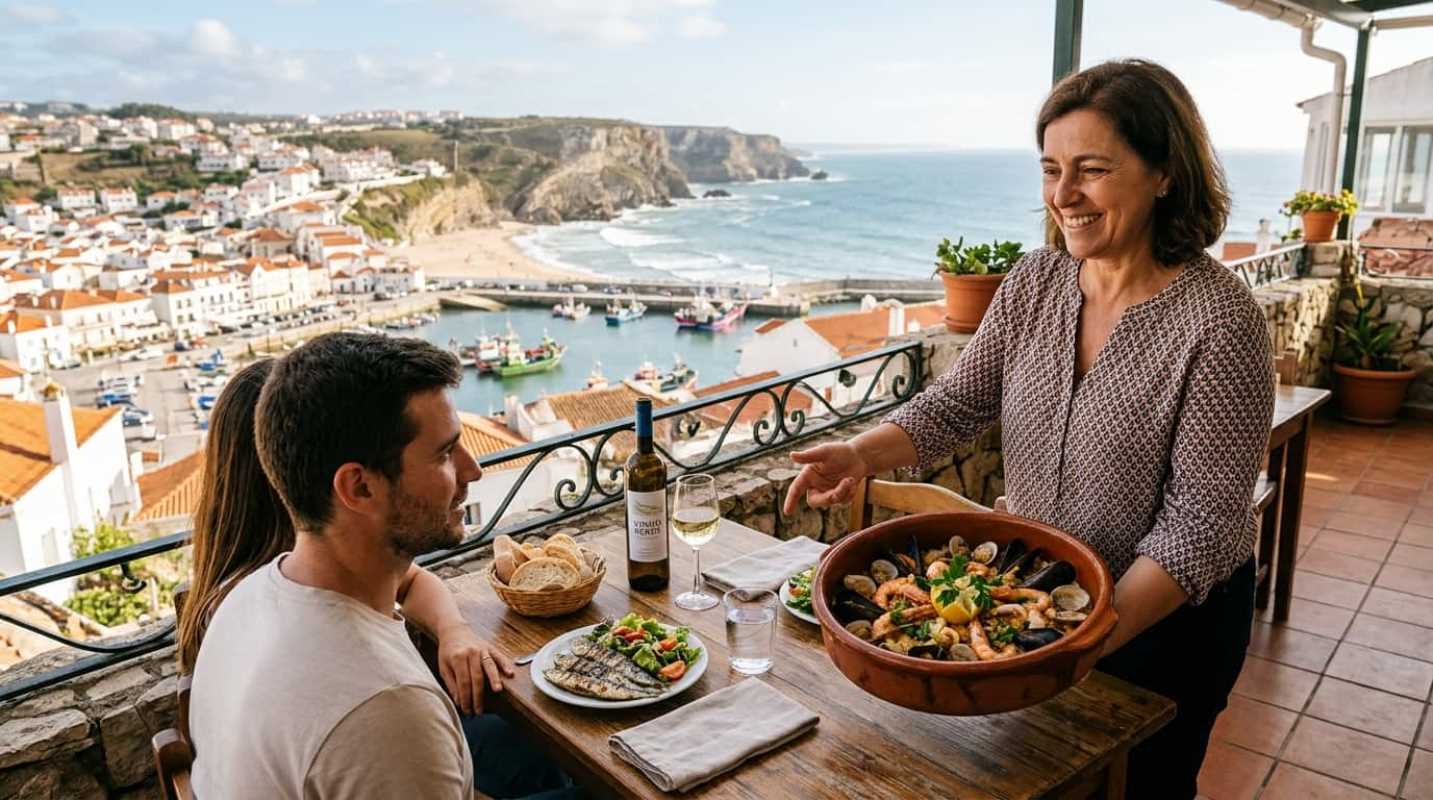
Have you ever stood on a cliff edge where the European continent simply ends, listening to the thunder of the Atlantic Ocean crashing into raw rock below? Portugal's 1,214 kilometers of coastline give you that exact sensation. The air smells of salt spray, wild thyme, and woodsmoke curling up from whitewashed chimneys.
It is a place where fishing boats still dictate the daily rhythm of coastal hamlets. You will find sweeping golden dunes, sheer dark cliffs, and quiet coves where fishermen mend nets by hand.
Food and the sea are inseparable here. The country leads the European Union in seafood consumption, with locals eating around 59.9 kilograms of seafood per person every single year.¹ That is more than double the European average. Pack your appetite and comfortable walking shoes. Here is your roadmap to exploring the Portuguese coast in 2026.
Exploring the Hidden Shores of the Algarve
Most travelers picture high-rise resorts and crowded umbrella rows when they hear the word Algarve. Skip the packed resort strips of Albufeira and head straight for the edges. The region actually splits into two distinct personalities: the sheltered eastern lagoons and the wind-swept western cliffs.
In the eastern corner, the Ria Formosa lagoon shelters small fishing hamlets where mass tourism rarely intrudes. Visit Cacela Velha, a quiet hilltop village overlooking shifting sandbanks and tidal channels.² The town consists of little more than a seventeenth-century fortress, a tiny church, and a cluster of whitewashed homes trimmed in bright blue and yellow. Take a small wooden boat across the lagoon at low tide. You will have miles of quiet sand spit almost entirely to yourself.
Just down the road sits Santa Luzia, known across the country as the octopus capital. Walk along the harbor and you will spot thousands of terracotta pots stacked on the wooden quays. Fishermen lower these pots to the seabed to catch octopus without hooks or nets.
Head west toward Burgau and Salema if you prefer limestone headlands and wilder water. Burgau still uses a cobblestone slipway where tractors drag wooden fishing skiffs directly up onto the street. Visit in late spring or autumn. May, June, September, and October offer sunny beach days, warm water, and blissfully empty streets.
Ocean Bounty and Pastry Traditions
Eating along the Portuguese coast is an honest, straightforward pleasure. You do not need white tablecloths or fussy menus to find extraordinary cooking. Small, family-run spots called tascas deliver the most memorable meals of your life.
Start with the staples
• Grilled Sardines: Look for sardines roasting over charcoal outside humble seaside grills. They are sweet, oily, and served whole on thick slices of crusty sourdough bread. Tascas only serve them fresh from June through September when schools feed on summer plankton.
• Cataplana de Marisco: This seafood stew takes its name from the domed copper vessel used to cook it.³ Clams, prawns, mussels, and firm white fish simmer with garlic, peppers, onions, and cured sausage. The clamped lid locks in every drop of steam, producing an incredible broth.
• Arroz de Lingueirão: This soupy razor clam rice is a specialty of the eastern lagoon beds. Plump clams are chopped and folded into short-grain Carolina rice with tomatoes, sweet peppers, and fresh cilantro.
• Amêijoas à Bulhão Pato: Tender clams get flash-fried in extra virgin olive oil, garlic, lemon juice, and white wine. Dip warm bread straight into the skillet to soak up the sauce.
Do not skip the sweeter side of coastal life. Every morning ritual begins at a pastelaria with an espresso and a warm pastel de nata. The puff pastry shatters between your teeth, giving way to a rich, caramelized egg custard dusted with cinnamon. Pair it with local wines in the evening. Try a crisp, mineral-laced Vinho Verde alongside grilled fish, or an aromatic white from the Alentejo.
Historic Coastal Villages Preserved in Time
Beyond the Algarve, the Southwest Alentejo and Vicentine Coast Natural Park protects wild cliffs from heavy development. Roads here wind through quiet cork oak forests before opening to dramatic coastal hamlets.
Stop in Odeceixe, where the Seixe River curves around a sandy peninsula right into the roaring ocean. White cottages cling to the hillsides, leading up to an old windmill overlooking the valley. Further north, Porto Covo and Zambujeira do Mar sit high on dark sea cliffs. Wander the cobblestone streets early in the morning before the day warms up. You will see local elders chatting on stone benches and cats sunning themselves on painted doorsteps.
These cliffs are home to one of Europe's most dangerous occupations: the harvest of percebes, or goose barnacles. Local harvesters scale slippery, wave-battered rocks during low tide with chisels and ropes. Coastal authorities strictly limit harvests to keep colonies healthy. Locals boil the barnacles for two minutes in seawater with a single bay leaf. Pinch the leathery tube, pull off the casing, and you get a sweet, briny bite that tastes exactly like the cold Atlantic.
Practical Travel Advice for Coastal Explorers
Getting around coastal Portugal requires a little planning, especially once you leave major rail corridors. A rental car gives you the freedom to reach remote coves and clifftop villages that buses never service.
Keep these practical rules in mind during your journey
• Understand the Couvert: Waiters will place bread, olives, sheep cheese, and marinated carrots on your table before you order. These items are not complimentary. You only pay for what you eat, which usually runs between two and five euros per dish.
• Check Fish Pricing: Fresh fish on display is almost always priced by the kilogram, not by the portion. Your server will gladly weigh the whole fish on a scale and tell you the exact price before the chef puts it over the charcoal.
• Respect Village Life: Many historic hamlets have narrow streets built for donkeys, not rental SUVs. Park in public lots outside the village center and explore on foot. Keep your voice down in residential lanes during the afternoon rest hours.
A balanced ten-day trip starts with three days exploring Lisbon and the surf breaks of Ericeira. Spend the next three days driving south through the wild coves of the Costa Vicentina. Finish your journey with four days unwinding in the quiet fishing towns of the eastern Algarve.
Why the Portuguese Coast Belongs on Your Itinerary
Coastal Portugal has managed something rare in southern Europe. It has preserved its traditional way of life alongside world-class food and rugged natural scenery. You can spend your morning walking deserted cliff trails and your afternoon eating clams pulled from the lagoon just hours earlier.
The warmth of the people matches the golden light that washes over the coast every evening. Plan your route, rent a car, and let the Atlantic coastline surprise you.
Sources:
1. FAO Fisheries & Aquaculture - Portugal
https://www.fao.org/fishery/facp/prt/en
2. We Travel Portugal - Cacela Velha Guide
https://wetravelportugal.com/cacela-velha/
3. Ola Daniela - What to Eat in the Algarve
https://oladaniela.com/what-to-eat-in-the-algarve/