Have you ever stood in a four-hour queue just to take a photo of a sunrise? It is exhausting, and it completely defeats the purpose of getting away. By 2026, the famous Banana Pancake Trail across Southeast Asia has become less of an adventure and more of a crowded theme park. Overtourism in places like Phuket, Bali, or Ha Long Bay has reached a tipping point, and travelers are searching for something real instead.
We have all seen those heavily edited social media photos of the same three swings or the identical kayak shots. But when you get there, the reality is often a long line of tourists and a gift shop. That is why slow travel has taken off so dramatically. It is about trading the checklist for actual connection.
So what does a true hidden gem look like now? It is not just a place without a Western coffee chain. It is a destination where you can still hear the wind in the trees, meet locals who are genuinely glad to see you, and find budget-friendly adrenaline without booking weeks in advance.
Slowing down in quiet towns lets you actually connect with the environment. Take Muang Ngoi in Laos, a roadless village accessible only by water, where life moves at the pace of the Nam Ou River.¹ Or the massive cave systems of Phong Nha-Kẻ Bàng in Vietnam, where you can still ride a bicycle past local pepper farms without dodging tour buses.²,³ Choosing these spots means your money stays in the community, and you get an experience you will actually remember.
Ha Giang, Vietnam and Scaling the Limestone Peaks
If you want to feel small in the best way possible, head to the far north of Vietnam. Ha Giang is the ultimate frontier for anyone who loves two wheels. The famous loop here is a winding ribbon of asphalt carved directly into massive limestone walls.
Picture this: you are riding a semi-automatic scooter around a bend, and suddenly the clouds part to reveal a valley so deep you cannot see the bottom. That is Ha Giang. It is not for the faint of heart. The roads are narrow, the drop-offs are steep, and you will definitely share the lane with a few water buffaloes. But that is exactly what makes it spectacular. If you do not ride, you can hire a local guide who drives while you sit on the back and soak in the views.
You do not need a massive budget to experience this. Trekking through the deep valleys or canyoning down rushing rivers costs a fraction of what you would pay in Western destinations. You can easily find local guides to lead you through secret mountain passes for under thirty dollars a day.
But the real magic is the people. Ha Giang is home to several ethnic minority groups, including the Hmong and Dao. When you visit, skip the large hotels. Stay in a local homestay, share a family-style dinner, and learn about their traditions. Just remember to ask before taking photos and respect their daily routines.
The Cardamom Mountains Cambodia and Into the Wild
Now, let's talk about going truly wild. Cambodia is famous for Angkor Wat, but if you head southwest, you will find the Cardamom Mountains. This is one of the largest remaining rainforests in Southeast Asia, and it feels like a completely different world.
The jungle here is dense and loud. You will fall asleep to a chorus of cicadas and wake up to the calls of pileated gibbons. Trekking here is a physical challenge. You will scramble over fallen logs, wade through cool streams, and probably get a couple of leeches on your boots. But when you reach a clearing and see the mist rising off the canopy, all that effort fades away. It is a reminder of what the earth looked like before we paved over so much of it.
The best gateway here is Chi Phat, a community-based ecotourism site. Think of it as conservation in action. Many of the local guides here are actually former poachers and illegal loggers who were retrained by the Wildlife Alliance. When you book a trek, eighty percent of your money goes straight to these guides and their families. This makes protecting the forest more profitable than destroying it.
What can you do here? You can rent a mountain bike to ride rugged jungle trails to hidden waterfalls like Chhay Chrey, or search for ancient burial jars. Guesthouses and eco-lodges cost between ten and twenty dollars a night, and guided day trips are usually under thirty-five dollars. It is raw, muddy, and incredibly rewarding.
Siargao’s Quiet Neighbors and The Dinagat Islands, Philippines
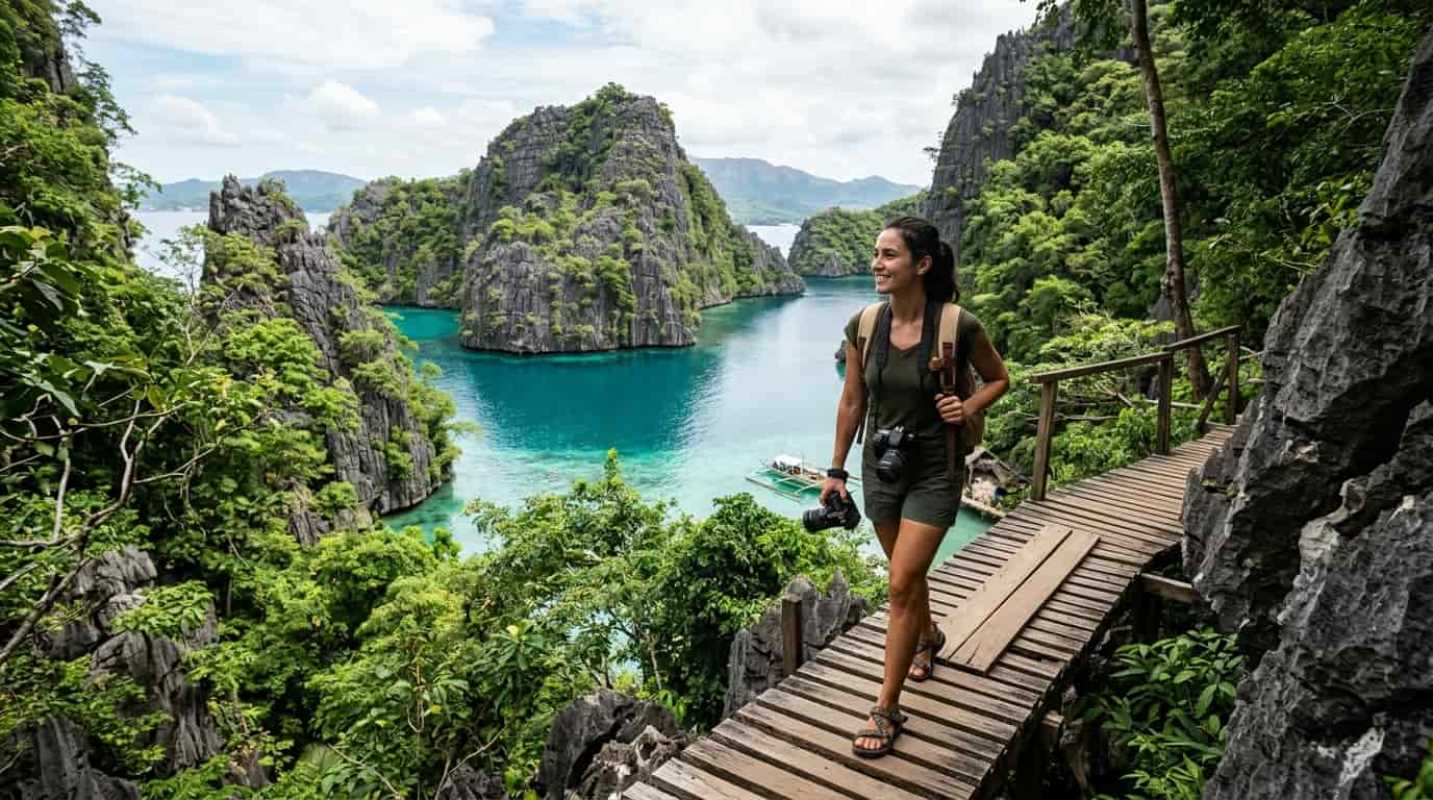
Most travelers flock to Siargao for the surf, but if you look just to the north, you will spot the Dinagat Islands. Although Siargao has grown busy with trendy cafes, Dinagat remains a quiet paradise of jagged limestone cliffs and secret blue lagoons.
The rock formations in Dinagat look like giant, melted wax candles dripping into the ocean. It is incredibly dramatic. One of the best spots is Bababu Lake, a unique body of water where fresh water sits on top of salt water. To reach it, you have to hike through a lush forest, which only adds to the sense of discovery. You will not find any tourist infrastructure there, just pure, quiet nature.
Why is it still so quiet? Mostly because it takes a bit of effort to get there. You will not find luxury resorts or English-speaking tour desks on every corner. Instead, you get empty white-sand beaches and crystal-clear waters that you can have entirely to yourself.
To get there, you need to catch a public ferry from Surigao City. Once you arrive in San Jose, the main town, you can rent a motorcycle to explore the island or hire a local boatman to take you island-hopping. It is a journey for travelers who do not mind simple guesthouses and local eateries.
Practical Tips for Understanding the Uncharted
Traveling off the grid requires a different mindset. You cannot just rely on your phone to solve every problem. Here are a few practical rules to keep you safe and respectful.
• Pack the necessities: Always carry a power bank, a basic first-aid kit, and offline maps. Cell service can disappear the moment you leave the main highway.
• Support local projects: Choose community-based tourism options where your money directly benefits the people living there.
• Watch your budget: Although major cities can easily drain a hundred dollars a day, these smaller towns are incredibly affordable. You can easily get by on twenty to thirty dollars a day for food, lodging, and local transport.
• Respect local customs: Dress modestly when visiting rural villages and always ask for permission before entering sacred spaces.
Step Into the Unknown
It is always easier to book the resort with the infinity pool and the swim-up bar. But convenience rarely makes for a great story. The moments that stay with you are the ones where you got a little lost, ate something you could not identify, and shared a laugh with someone who did not speak your language.
Venturing off the standard tourist path changes how you see the world. It reminds you that real travel centers on connection and shared humanity. In 2026, make the choice to skip the crowds and find your own path.
The wild corners of Southeast Asia are waiting. All you have to do is take the first step.
Sources:
1. Muang Ngoi Laos Guide
https://eternalarrival.com/muang-ngoi-laos/
2. Phong Nha Itinerary
https://www.scribd.com/document/858308602/phong-nga-itinerary
3. Phong Nha Caves Guide
https://bea-adventurous.com/phong-nha-2/