Have you ever dreamed of waking up to the sound of howler monkeys, hiking active volcanoes, and diving in turquoise waters without draining your bank account? Central America has always been the go-to slice of paradise for travelers wanting to stretch their dollars. But let's be real for a second. The travel scene in 2026 looks a bit different than it did a few years ago. The old Gringo Trail is still there, but prices have shifted.
Some countries remain incredibly cheap, while others will make your wallet cry if you aren't careful. Being a budget backpacker here means making smart choices, slowing down, and trading resort luxury for local experiences. It means trading private taxicabs for crowded public buses and five-star dinners for street-side pupusas. Ready to figure out how to make it work?
Introduction to the Ultimate Budget Playground of Central America
The allure of this region lies in how much variety you can pack into a single trip. You can surf Pacific waves in the morning and hike through a misty cloud forest by afternoon. Best of all, you can do it on a shoestring budget if you know the ropes.
In 2026, the backpacker mindset is all about flexibility and cultural immersion. It is about realizing that the best stories rarely come from sterile tour buses or expensive resorts. They come from getting lost in local markets, practicing your Spanish with a fruit vendor, and sharing a dorm room with travelers from around the world.
To make this adventure work, you have to throw out the rigid itineraries. The secret to budget travel here is letting the road guide you. If you try to plan every single day, you will end up spending more on bookings and missing out on the spontaneous detours that make backpacking so special.
Mastering Budget Itinerary Planning
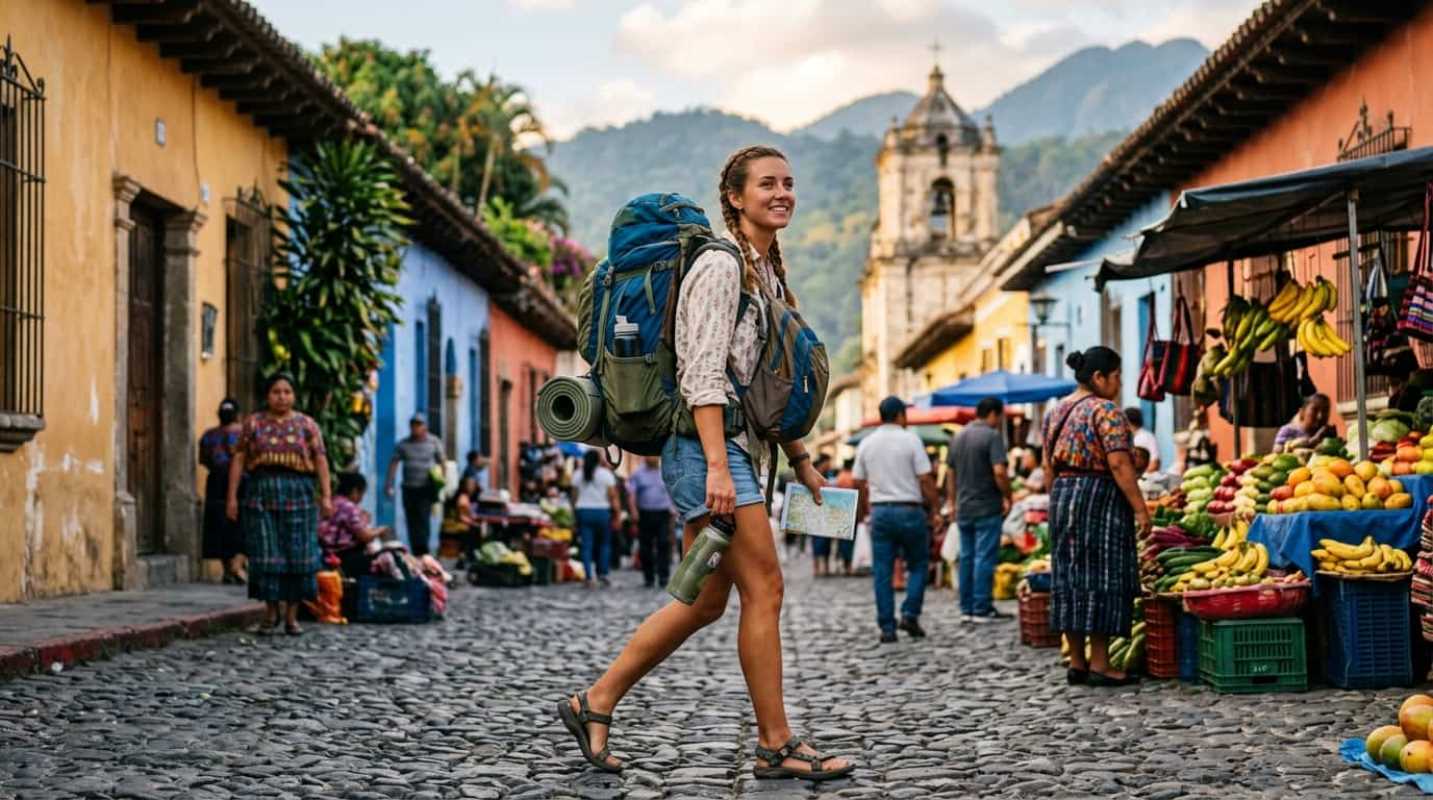
How do you build a route that doesn't eat through your savings in the first two weeks? It starts with balance. Everyone wants to see the famous spots. You will definitely want to walk the cobblestone streets of Antigua or swim in the pools of Semuc Champey. But if you only stick to the famous tourist hubs, your budget will take a serious beating.
The trick is to mix these famous places with lesser-known towns. Instead of spending your entire beach budget in Costa Rica, why not head to the Pacific coast of Nicaragua? You get the same incredible surf and warm water for a fraction of the price.
Where you go matters just as much as how fast you travel. The cost of living varies wildly across these borders. If you look at the numbers, Nicaragua, Guatemala, and El Salvador are incredibly budget-friendly.¹ A shoestring traveler can easily get by on $22 to $35 USD a day in these countries. On the flip side, Costa Rica and Belize are expensive, where even a basic day can easily run you $60 to $80 USD.² If you are on a tight budget, spend the bulk of your time in the cheaper northern and central countries.
Then there is the magic of slow travel. Every time you pack your bags and move to a new town, you spend money on buses, shuttles, and hostel booking fees. By staying in one place for a week or two, you can negotiate better weekly rates at hostels, find the cheapest local grocery stores, and truly get to know the community.
Navigating Hostel and Transport Costs
Where are you going to sleep? Hostel standards have gotten much better recently, but prices have also crept up. Social boutique chains are everywhere now, but they charge a premium. If you want to keep costs down, you have to look beyond the big-name party hostels.
To find cheap, safe places to stay, look for family-run guesthouses (called hospedajes) or independent hostels. In Nicaragua, a basic dorm bed can cost as little as $5 to $12 USD per night. In Costa Rica, that same bed will likely cost you $17 to $22 USD.² Always read recent reviews to check on safety and cleanliness, and try booking directly with the hostel instead of using third-party apps to see if they will give you a discount.
For moving around, you face a classic backpacker choice: comfort or cash?
• Chicken Buses: These retired, colorful US school buses are the ultimate budget lifesaver. They are loud, crowded, and sweaty, but they cost next to nothing. In Guatemala, a short ride is under $1.30 USD, while a long four-hour journey is only about $3.00 to $6.50 USD. In Nicaragua and El Salvador, you will rarely pay more than $2.00 USD for a ride.
• Shared Tourist Shuttles: These are air-conditioned microbuses that take you directly from hostel to hostel. They are convenient, but they cost a lot more. A trip from Antigua to Lake Atitlán will cost you $15 to $25 USD. For long international border crossings, they can run up to $60 USD.
• International Express Buses: Companies like Tica Bus or Pullmantur are great for long distances. Tickets usually cost $25 to $40 USD, and the drivers often help you handle the confusing border paperwork.
• Ride-Hailing Apps: In major cities like San José or Panama City, avoid street taxis and use Uber or DiDi. A 15-minute ride is usually just $4 to $7 USD. If you are in Managua, download InDriver, which lets you bid your own fare.
Tips or Crossing Land Borders
Crossing land borders in Central America can feel like stepping into a chaotic outdoor market. It is loud, confusing, and full of people trying to grab your attention. But if you know what to expect, you can get through without losing your sanity or your cash.
First, you need to understand the CA-4 agreement. Guatemala, El Salvador, Honduras, and Nicaragua share a border treaty.³ When you enter this zone, you get a single 90-day stamp for all four countries. Crossing between them does not reset your clock. To get another 90 days, you have to leave the CA-4 zone completely, usually by heading down to Costa Rica or up to Mexico.
Next, let's talk about fees. Always keep crisp, clean US dollars in small bills ($1, $5, and $10) in your pocket. Border officials will reject bills with even the tiniest tear. Here is what you can expect to pay at the major land borders.
• Nicaragua: You will pay a $10 USD entry fee for a tourist card, plus a $2 to $3 USD municipal processing fee. When leaving by land, expect a $3 USD exit fee.
• Costa Rica: There is an exit fee of $8 to $10 USD when leaving by land. Pay this online before you get to the border to avoid broken payment kiosks.
• Honduras: The entry fee is about $3 USD.
• Guatemala and El Salvador: These borders are officially free. If an official asks for a "processing fee", politely ask for an official receipt. Usually, the fee will suddenly be waived.
• Belize: You must pay a $20 USD exit fee in cash when leaving by land.
How do you avoid getting ripped off? Watch out for "helpers" who offer to guide you through the lines or fill out your forms. They will take your passport and demand a huge fee to give it back. Only deal with uniformed officials behind actual desks.
Also, places like Costa Rica and Panama are incredibly strict about proof of onward travel. They will not let you enter without a ticket showing you are leaving the country. If you do not have fixed plans, use a temporary ticket-rental service online for about $15 USD to get a valid flight reservation.
Eating, Drinking, and Experiences on a Dime
You do not need to spend a fortune to eat well in this part of the world. In fact, the cheapest food is often the most delicious. Skip the tourist-oriented cafes and look for local comedores (small, family-run restaurants).
In these local spots, you can get a massive plate of food, usually called a casado in Costa Rica or a plato típico in Honduras, for just a few dollars. It usually comes with rice, beans, plantains, cabbage salad, and a choice of meat. Street food is another budget savior. Grab fresh pupusas in El Salvador or baleadas in Honduras for less than $1.50 USD each.
For activities, nature is your best friend. Hiking local trails, swimming in public waterfalls, and lounging on public beaches will cost you absolutely nothing. Many cities offer free walking tours where you only need to tip your guide a couple of dollars.
Save your money for the big, bucket-list experiences. You do not want to travel all this way and miss out on the good stuff just to save a buck. Budget specifically for these splurges:
• Volcano Boarding in Nicaragua: Sliding down the black ash of Cerro Negro near León is a must-do, costing around $30 to $40 USD.
• Scuba Diving in Honduras: The Bay Islands, especially Utila, are famous for having some of the cheapest dive courses in the world, though the islands themselves are pricier than the mainland.²
• Acatenango Volcano Hike in Guatemala: Watching an active volcano erupt overnight is worth every penny of the $50 to $80 USD tour fee.
Your Path to a Legendary Adventure
At the end of the day, backpacking through Central America is about embracing the unexpected. Your bus will probably break down at some point. You might get caught in a sudden tropical downpour, or you might end up staying in a tiny surf town twice as long as you planned.
That is why flexibility is the most important tool in your backpack. Do not budget down to the very last penny. Leave yourself a little breathing room for those spontaneous nights out or an unexpected shuttle ride when you are just too tired for a chicken bus.
The rewards of exploring this region independently are massive. You will meet incredible people, see mind-blowing sights, and realize just how far your money can take you when you are willing to step outside your comfort zone. So pack your bags, keep an open mind, and get ready for the trip of a lifetime.
Sources:
1. How to Travel on a Budget in Central America
https://www.centralamerica.com/experiencing/travel/how-to-travel-on-a-budget-in-central-america/
2. The Ultimate Backpacker Price Breakdown: Central America
https://www.thelostandfoundhostel.com/blog/2026/3/29/the-ultimate-backpacker-price-breakdown-central-america-from-dirt-cheap-to-surprisingly-expensive
3. Backpacking Central America Travel Guide
https://www.thebrokebackpacker.com/backpacking-central-america-travel-guide/