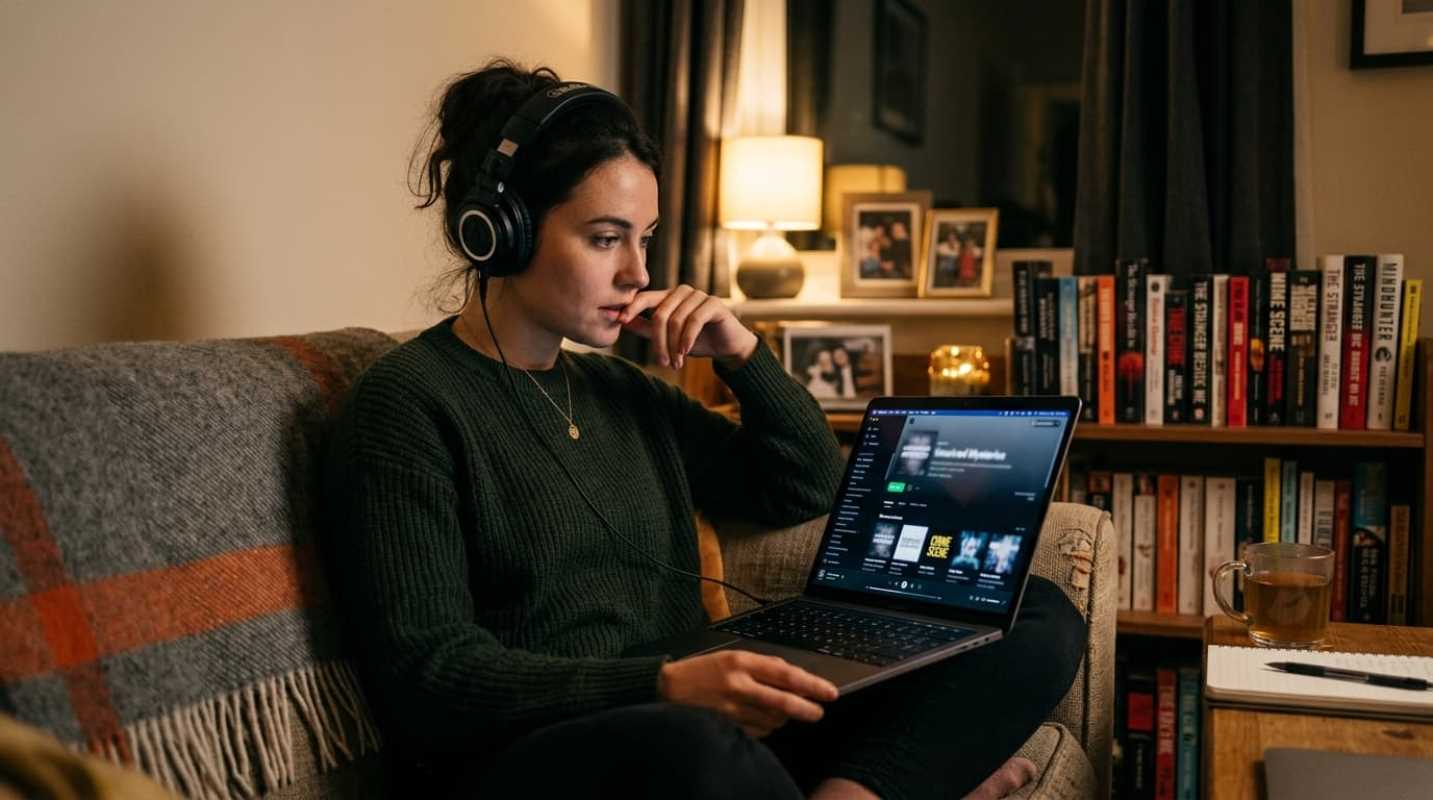
Think about your last free evening. Were you relaxing on the couch, folding laundry, or washing dishes while listening to a detailed description of a decades-old cold case? If so, you are far from alone. We are living in an era completely dominated by true crime. What was once a niche interest hidden in the back of video rental stores has exploded into a massive, multi-billion-dollar media empire. You can find it everywhere, from prestige streaming documentaries to daily podcasts and viral TikTok videos.
The numbers behind this trend are staggering. A landmark report from Edison Research shows that 84% of the US population age 13 and older consumes true crime content.¹ That is an estimated 230 million people tuning in to hear about the worst things human beings can do to one another.
But why are we so collectively drawn to the darker side of human nature? Is it just morbid curiosity, or is there something deeper happening in our brains when we hit play on another murder mystery? To understand this obsession, we have to look closely at the psychology behind our viewing habits.
The Psychology of True Crime Appeal
For many people, the obsession with true crime stems from a deeply wired survival mechanism rather than a desire to celebrate violence.
This is especially true for women, who make up the vast majority of the genre's audience. A YouGov poll found that 61% of women regularly consume true crime content.² In the podcasting world, women are twice as likely as men to listen to these shows. Why are women so drawn to stories that highlight their worst nightmares?
Psychologists point to a concept called defensive vigilance. A study published in the British Journal of Psychology found that women often use these stories as a tool for mental rehearsal.³ By watching or listening, you are subconsciously learning how to identify threats, recognize the warning signs of predatory behavior, and figure out how to escape dangerous situations. It is a way to gain a sense of control and preparedness in an unpredictable world.
There is also the thrill of controlled fear. Much like riding a roller coaster or watching a horror movie, true crime triggers a physical rush of adrenaline and cortisol. Because you are experiencing this tension from the safety of your own home, your brain can process the fear and resolve it with a deep sense of relief.
Finally, social media has transformed how we engage with these stories. Platforms like TikTok and Reddit have created a culture of compulsive posting and forensic fandom, where viewers do not just watch a case. They feel compelled to help solve it. This constant connection can make us feel like we are part of a community, even if it sometimes leads to heightened anxiety.
Understanding the Ethical Storytelling Debates
As the true crime machine keeps growing, it is running headfirst into some massive ethical problems. The line between spreading awareness and exploiting real-life tragedy has become incredibly thin.
Think about the massive backlash surrounding Netflix's dramatized series about the Menendez brothers. Although the show pulled in over 30 million views in its first two weeks, it faced intense criticism from the actual family. Erik Menendez released a statement calling the series a grotesque shock drama filled with falsehoods. The family was never consulted, raising a painful question: when does a family's worst trauma simply become corporate entertainment?
This issue is not limited to Hollywood studios. The rise of citizen sleuths has turned internet users into armchair detectives, sometimes with disastrous results. During the high-profile Karen Read trial, online groups flooded social media with unverified conspiracy theories, harassed witnesses, and doxed individuals. What started as an attempt to find the truth quickly turned into a chaotic digital witch hunt.
We are also seeing some truly bizarre moments of commercialization on social media. Imagine listening to a creator detail a horrific case of child abuse, only for them to abruptly pause and pitch a protein powder advertisement. This kind of cognitive dissonance is making many viewers uncomfortable. It forces us to ask whether we are treating real human suffering as nothing more than a backdrop for product placement.
Genre Saturation and the Changing Media Market
After years of explosive growth, the true crime market is showing signs of serious fatigue. We have reached a point of extreme saturation where every minor case is turned into a multi-part documentary series.
Is the bubble finally starting to burst? Many viewers are growing tired of cheap, sensationalized content that prioritizes dramatic plot twists over human dignity. When every streaming platform is flooded with the same recycled stories, the quality of production inevitably drops.
Because of this, we are starting to see a major shift in what audiences want. Viewers are actively turning away from sensationalized gore and demanding more responsible storytelling.
In fact, the Edison Research report showed that 77% of true crime podcast listeners prefer content that is victim-centered.¹ People want to hear stories that honor the victims, support their families, and focus on systemic issues rather than just profiling the minds of killers.
Watching With Intention and the Future of the Genre
If you want to satisfy your curiosity while supporting ethical storytelling, you have to be selective about what you watch and listen to. Here are a few ways to find content that respects the lives behind the headlines.
• Advocacy-first podcasts: Look for shows that partner with non-profits, fund cold case investigations, and actively work to solve crimes rather than just narrating them.
• Victim-centered documentaries: Choose series that spend more time showing the lives and legacies of the victims than profiling the psychology of the perpetrator.
• Investigative journalism series: Seek out deep-dive reporting from established journalists who spend months or years verifying facts and holding the justice system accountable.
We probably will not stop consuming true crime anytime soon. The desire to understand the dark corners of the human mind and prepare ourselves for the worst is too deeply ingrained in our psychology.
But we can choose to be more conscious consumers. We can actively support creators who prioritize ethics, work directly with victims' families, and use their platforms for actual advocacy. Networks like audiochuck, the creators of the hit podcast Crime Junkie, are leading this change by funding DNA testing for cold cases and raising money for victim advocacy groups.
When true crime is handled with care, it has the power to do incredible good. It can bring attention to forgotten cold cases, expose flaws in the justice system, and help protect vulnerable communities.
The next time you queue up a new episode or docuseries, take a moment to think about the people involved. By choosing stories that respect human dignity, we can turn our collective obsession into a force for real-world change.
Sources:
1. True Crime Consumer Report - Edison Research
https://www.edisonresearch.com/solutions/true-crime-consumer-report/
2. True crime: How it affects Americans - YouGov
https://yougov.com/en-us/articles/50142-true-crime-how-it-affects-americans
3. True crime, compulsive engagement, and mental health - British Psychological Society
https://www.bps.org.uk/research-digest/true-crime-compulsive-engagement-and-mental-health