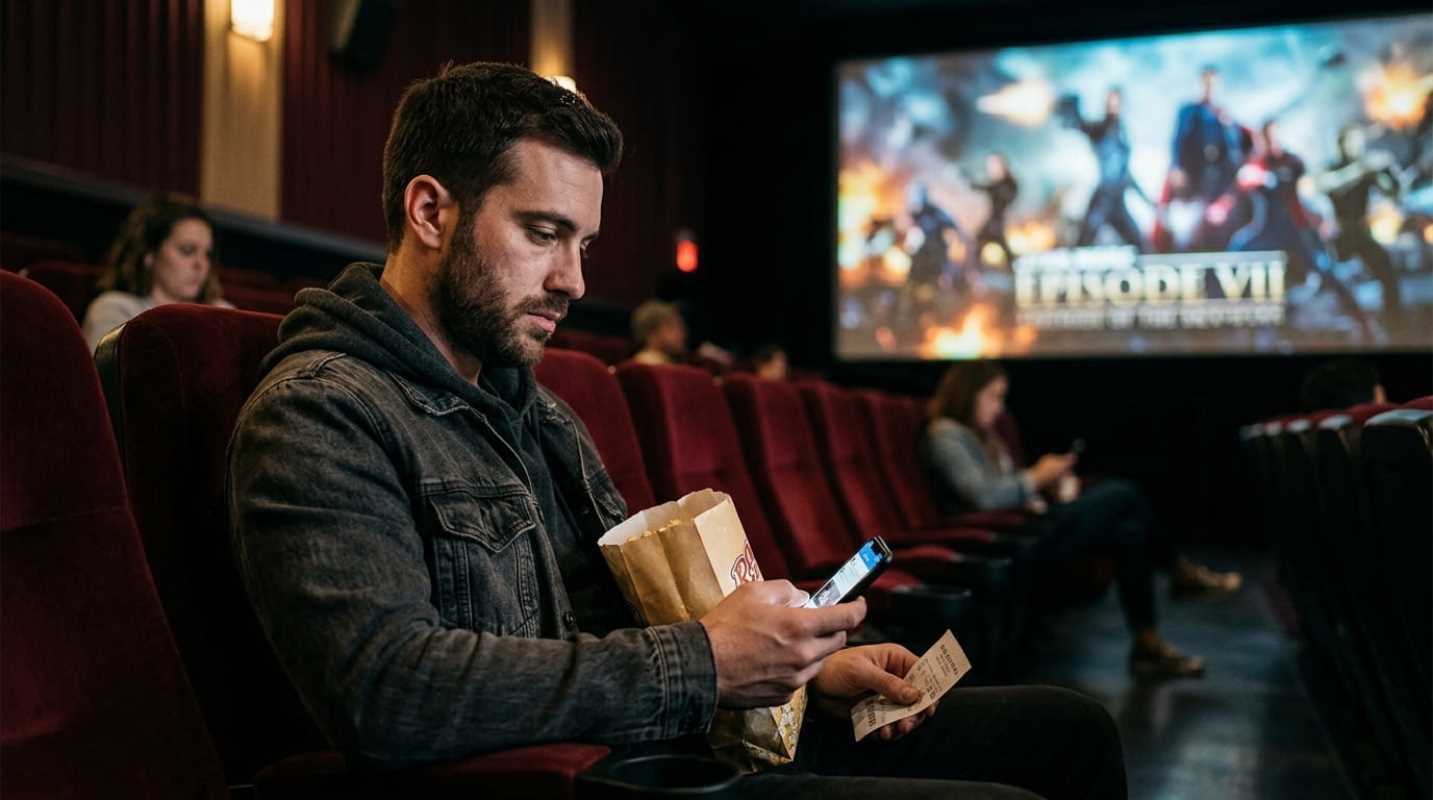
Have you ever sat in a movie theater, watched a trailer for yet another superhero spin-off or 90s cartoon remake, and felt a quiet sense of exhaustion? You are definitely not alone. There was a time when a trip to the cinema felt like an adventure into the unknown. Today, it often feels like an endless loop of familiar faces, recycled jokes, and predictable explosions.
This feeling is what we call franchise fatigue. It is the defining mood of our current era of entertainment. For years, major studios treated established intellectual property like a magical printing press. If a movie had a recognizable name, they built an entire universe around it.
But the winds are shifting. Although Hollywood executives still cling tightly to their beloved brands, audiences are sending clear signals that they are tired of the same old recipes. This growing burnout is forcing a much-needed pivot toward fresh, original stories that don't require you to watch three seasons of a streaming television show just to understand the plot.
The Numbers Don't Lie on Diminishing Box Office Returns
Let's look at the actual math because the box office charts tell an incredibly dramatic story. In 2024, the domestic box office pulled in $8.56 billion.¹ This was a slight drop from the previous year, mostly because strikes delayed some of the biggest releases. But when the big movies did show up, sequels absolutely dominated.
In fact, for the first time in modern history, every single film in the global top ten was a sequel, spin-off, or franchise installment.² We saw Inside Out 2 rake in a massive $1.69 billion, while Deadpool & Wolverine brought in $1.33 billion. It looked like franchises had a total monopoly on our attention.
But look closer at the films that didn't have a number in the title. The highest-grossing original film of 2024 was IF, which struggled to make $190 million globally. Because of its massive production budget, it was a financial disappointment.
The pattern carried over into 2025. Mega-franchises like Ne Zha 2 and Zootopia 2 made billions of dollars. Yet, the guaranteed hit model is starting to show some serious cracks. Aside from Ryan Coogler's horror film Sinners, which defied the odds by grossing $279.6 million domestically, original mid-budget films had a brutal time. Movies like Drop and Mickey 17 struggled to find audiences in theaters.
So why do studios keep making these massive sequels if audiences are complaining? It comes down to simple math and risk management. According to data from FranchiseRe, successful franchise films average a 3.1x return on their production investment.³ Compare that to a meager 1.8x return for original films. For risk-averse executives, franchises are a financial shield, even if the creative spark is gone.
Decoding Audience Burnout Signals
So what does this actually mean for you as a viewer? It means you are likely experiencing what researchers call homework burnout.
A study by the Pew Research Center found that 47% of active moviegoers feel overwhelmed by the relentless pace and volume of franchise releases. Meanwhile, Hub Entertainment Research revealed that 62% of people actually prefer original stories over another sequel. Only 29% of consumers say they actively keep up with all the entries in a given franchise.
Think of it like this. Watching a movie shouldn't feel like studying for a final exam. Audiences are increasingly refusing to do the required reading. This is especially true for long-running series where viewers feel they have hit a wall:
• The Walking Dead: 54% of surveyed viewers say they are no more likely to watch new entries.
• Game of Thrones: 49% of audiences are opting out of new spin-offs.
• Marvel Cinematic Universe: 36% of viewers feel they have reached their limit with new releases.
Even the younger crowd is feeling the weight. A study of teen moviegoers by Screen Engine found that Gen Z is highly sensitive to lazy, cash-grab sequels. But they face a difficult choice. Because movie tickets are so expensive, going to the theater has become a luxury. A franchise film acts as a safe social bet, serving as a shared language for a night out with friends. They are hesitant to risk hard-earned money on an unknown original film unless it goes viral on TikTok.
This fatigue isn't just happening in theaters. It is deeply affecting our living rooms too. On streaming platforms, the endless expansion of these universes is falling flat. Season two of The Rings of Power on Amazon Prime Video saw a massive 60% drop in total minutes watched compared to its first season. Audiences want to explore entirely new worlds instead of lingering in old ones.
The Original Content Resurgence
The good news is that originality is fighting back. We are seeing a massive shift as we move through 2026. Audiences are actively craving new ideas, and risk-taking is becoming the ultimate survival approach for smart studios.
Original films and fresh stories are projected to make up 36% of the global box office this year. That is a massive jump from the historic low of 21% back in 2019. Audiences are finally voting with their wallets for something different.
We have seen incredible proof of this shift. The sci-fi adventure Project Hail Mary brought in an amazing $684 million globally. Meanwhile, the biopic Michael cleared over $1 billion. These are not tired sequels. They are fresh cinematic experiences that got people excited to buy a ticket.
Even on streaming, the biggest hits are the ones that offer something completely new. Amazon's Fallout adaptation became a giant success because it built a fresh, wild world rather than dragging out an old franchise past its expiration date.
The Path Forward for the Big Screen
How does Hollywood adapt to this changing environment? The era of the automatic box office hit is over. Simply slapping a famous comic book logo on a poster is no longer a golden ticket to a billion dollars.
Instead, we are seeing a shift toward what experts call smarter nostalgia. Audiences don't want a new sequel every six months. They want beloved properties to stay dormant until there is an actual, high-quality story to tell. Projects like the upcoming The Devil Wears Prada 2 show that nostalgia can still work, but only if it feels like a special event rather than a weekly chore.
Ultimately, the theatrical experience is diversifying. Although massive blockbusters will always have a place, the return of original stories is proving that audiences still want to be surprised. The next time you head to the theater, take a chance on something new. It might just be the breath of fresh air you have been waiting for.
Sources:
1. Domestic Box Office Grossed $8.56 Billion in 2024
https://www.forbes.com/sites/bradadgate/2025/01/05/led-by-sequels-domestic-box-office-grossed-856-billion-in-2024/
2. The 2024 Box Office Top Ten Are All Sequels
https://www.reddit.com/r/movies/comments/1gyceny/the_2024_boxoffice_top_ten_are_all_sequels/
3. FranchiseRe: Original Movies vs Franchises ROI
https://franchisere.substack.com/p/the-odyssey-christopher-nolan-matt-daman-zendaya-tom-holland-robert-pattinson-anne-hathaway-charlize-theron-elliot-page-original-movies-musical-biographies