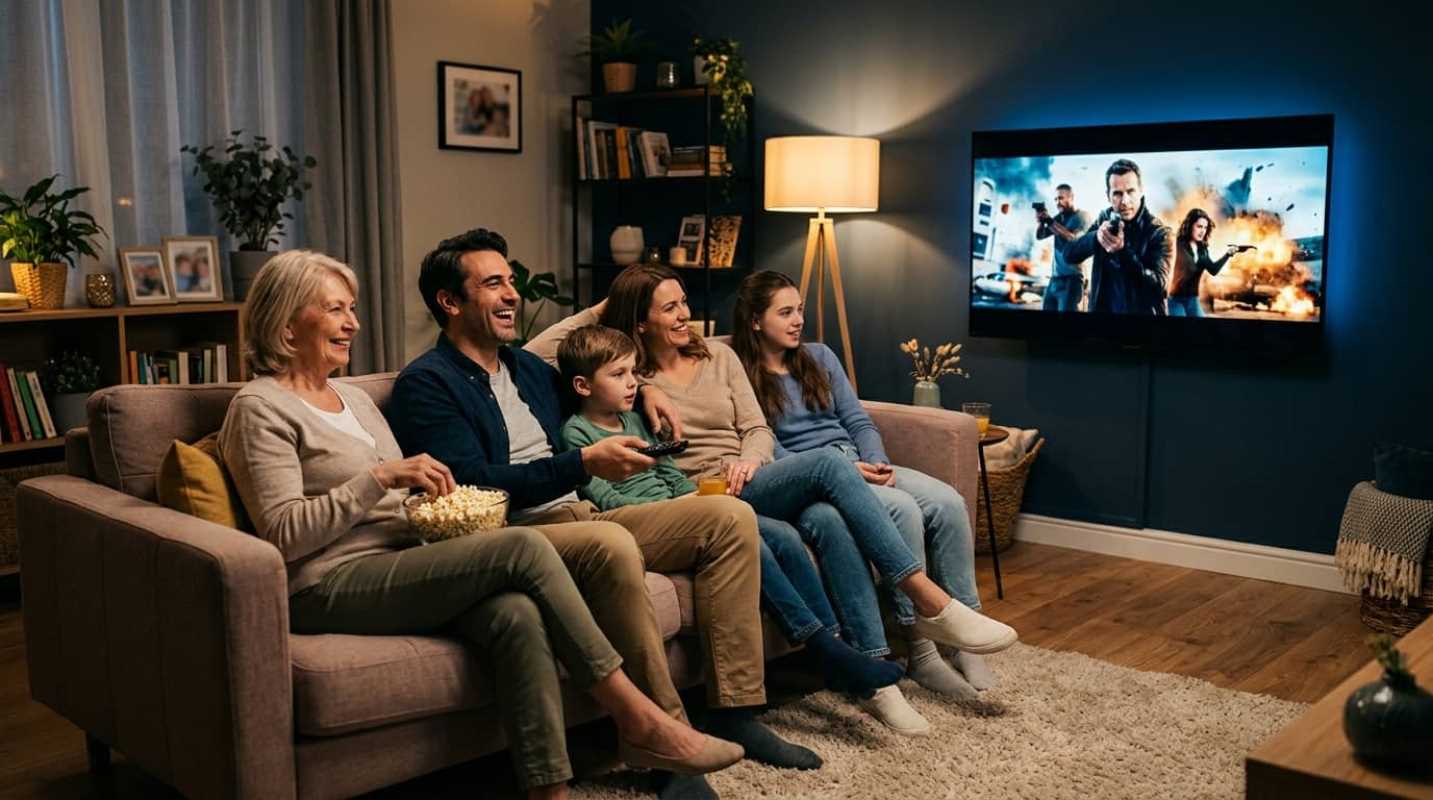
Remember waking up early on Saturdays to watch cartoons? You probably sat on the floor with a bowl of sugary cereal, watching colorful characters chase each other with giant mallets. For decades, the Western world put animation in a neat little box labeled "children's entertainment."¹ But things are completely different now. The scene has shifted dramatically, driven by digital storytelling and a massive leap in artistic sophistication. Animation is no longer just a genre. It's a powerful medium that speaks to adults just as much as it does to children.
The global adult animation market was valued at 13.8 billion dollars in 2024. It's projected to reach 35.4 billion by 2033, with an annual growth rate of 9.9%.² If you include adult-skewing anime and merchandise, the market is a massive 62.4 billion dollars in 2025.
Who's actually watching this stuff? It's not just kids dragging their parents to theaters.
• The Core Audience: The 25 to 34 age bracket is the biggest slice of the pie, and it accounts for 32.5% of the total market share.²
• The Gen Z Shift: A late 2025 study from the UCLA Center for Scholars and Storytellers found that 48.5% of youth aged 10 to 24 now prefer animated content over live-action.
• Gender Diversification: The audience is broadening. Like, Hayao Miyazaki's Oscar-winning film, The Boy and the Heron, drew a 62.9% female audience share in major international markets like China.
The Evolution of the Medium Beyond Saturday Morning Cartoons
Why are you and your friends suddenly talking about animated films at dinner parties? It comes down to the stories being told. Modern studios are using animation to tackle heavy, complex themes like grief, trauma, and existential dread.
Think of it like this. If you want to show a character drowning in grief in a live-action movie, you have to rely on a tight close-up of an actor crying. It's effective, but it's limited. In an animated film, the entire room can dissolve into a dark, swirling ocean. The walls can literally close in. Animation lets us see the world exactly how the character feels it, and this makes the psychological experience incredibly visceral.
How does the narrative depth of an animated feature compare to a live-action drama? Often, animation wins because it bypasses your intellectual defenses. You see a stylized character and immediately empathize with their raw emotion, free from the distractions of celebrity actors or realistic limitations.
Look at how recent films handle these themes:
• Anxiety and Social Isolation: Inside Out 2 went deep into the messy world of teenage anxiety, social isolation, and existential panic, capturing feelings that every adult in the theater recognized instantly.³
• Mortality and Motherhood: The Wild Robot explored the bittersweet pain of raising a child and the harsh realities of survival, and it had audiences of all ages weeping in their seats.
• Grief and War: The Boy and the Heron built a surreal world to process wartime trauma and family loss, and it offered a narrative designed purely for mature minds.
The Economics of Maturity and Box Office Crossover Appeal
If you think mature storytelling is just a niche artistic pursuit, the box office numbers will make you think again. The commercial success of these films proves that adult-skewing animation is a goldmine.
Let's look at some of the biggest recent hits:
• Inside Out 2: This film brought in a massive 1.699 billion dollars worldwide, and it became the highest-grossing animated film ever.³ Although kids loved it, 37% of the opening weekend audience consisted of young adults between 18 and 34 years old.
• The Wild Robot: It brought in 334.5 million dollars globally. Surprisingly, 58% of the opening weekend ticket buyers were over the age of 25, while only 23% were under 12.
• The Boy and the Heron: This film made 294.2 million dollars worldwide, with the 18 to 34 age group making up a staggering 80% of ticket sales in North America.
• The Lord of the Rings: The War of the Rohirrim: Warner Bros. created this adult-targeted anime prequel to bridge the gap between fantasy fans and anime lovers, and this showed how major studios are willing to bet on mature animated formats.
What's driving this shift? Streaming platforms are a massive factor, and they account for 41.8% of the adult animation distribution market in 2025. Although overall television commissions have slowed down, adult animation has remained incredibly steady, and streaming networks have kept a baseline of over 40 mature series orders every year since 2022.
The Visual Language of Adult Animation
Have you noticed how different animated films look lately? The era of every movie looking like the standard Disney style is officially over. We're seeing an explosion of diverse artistic styles that appeal directly to mature visual tastes.
Studios are moving away from clean, sterile 3D CGI. Instead, they're embracing stylized realism and 2D/3D hybrid looks. It's a visual revolution, and this allows for darker, more atmospheric worlds.
Here is how the visual language is changing:
• Hand-Painted Aesthetics: The Wild Robot used a watercolor style to create an organic, warm feel that felt like a living painting.
• Visual Metaphors: Indie films like The Memory Atlas used fading watercolor visuals to show a character's struggle with memory loss and grief.
• Hard-R Action and Detail: Shows like Blue Eye Samurai combined historical drama with intense, stylized action that simply wouldn't work in live-action without looking cheesy.
This shift is heavily influenced by international styles and independent creators. Anime, in particular, has shown Western studios that audiences want bold, stylized visuals that don't shy away from blood, shadows, and complex lighting.
The Future and Why Animation is the Most Important Medium of the Decade
So where do we go from here? As we look forward through 2026 and beyond, the old idea that cartoons are just for kids is disappearing fast. Audiences are demanding more intelligence from their screens, and animation is uniquely positioned to deliver it.
Look at Netflix's Arcane, which released its second season in late 2024. It had a massive 250 million dollar budget across two seasons, and this proved that studios are willing to spend live-action blockbuster money on adult animated dramas. It paid off, and it drew 234 million hours viewed in its first month, showing that adults are hungry for complex political intrigue and tragic stories.
As Yalda T. Uhls from UCLA pointed out, the data challenges the old assumption that young audiences don't care about deep storytelling. They do, and they want to see it in animated form.
Media analyst Paul Dergarabedian notes that films like Inside Out 2 succeed because they have unlimited demographic appeal. They speak to the human experience, not just a specific age group.
The stigma is gone. Animation isn't a genre, as director Brad Bird famously said. It's a way of telling stories that cannot be told any other way. The future of cinema is hand-drawn, computer-generated, and completely grown-up.
Sources:
1. Why animation is not just for kids
https://brignews.com/2024/03/15/why-animation-is-not-just-for-kids/
2. Adult Animation Market
https://datahorizzonresearch.com/adult-animation-market-39416
3. Inside Out 2 Box Office Pixar
https://time.com/6989419/inside-out-2-box-office-pixar/