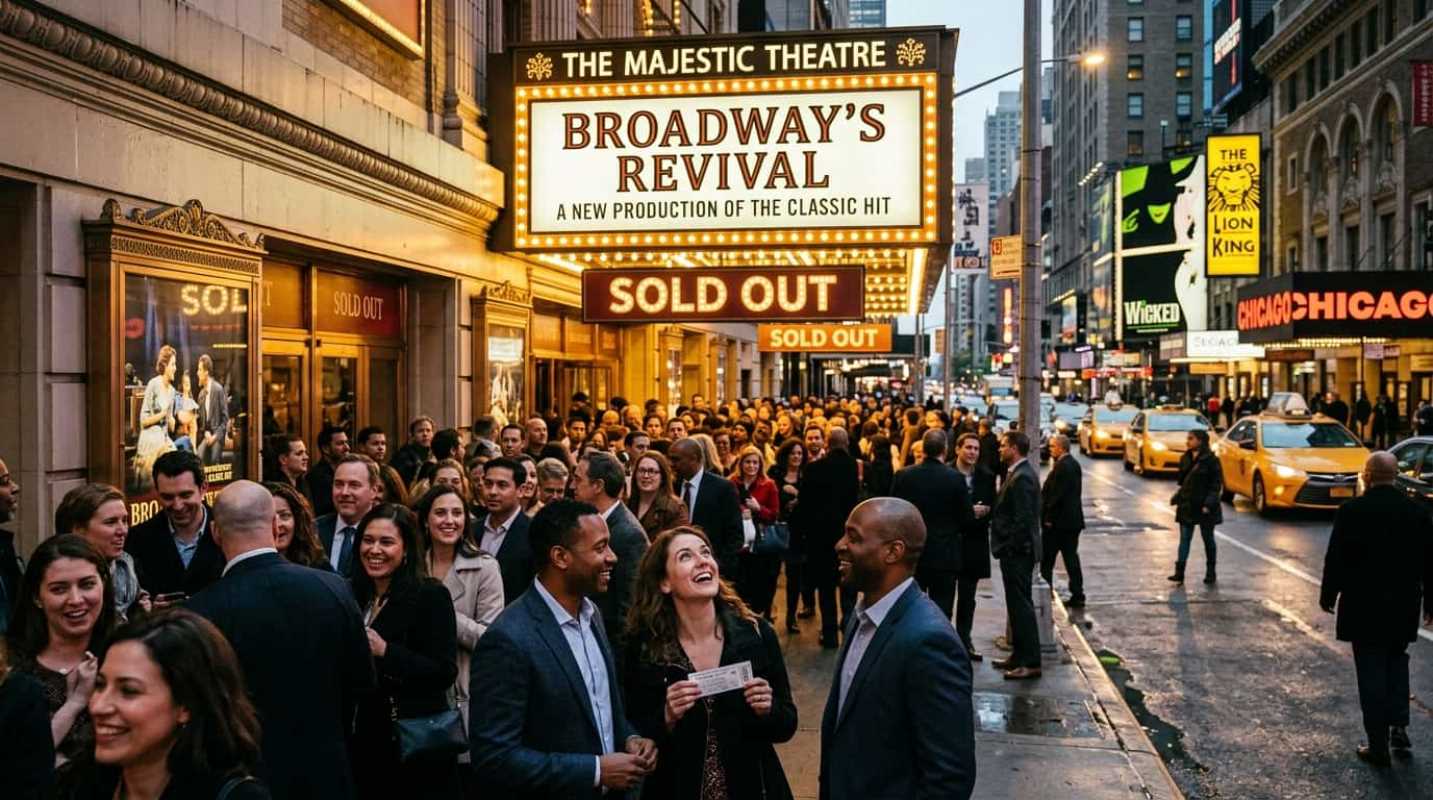
Have you tried buying a Broadway ticket lately? If you have, you probably noticed two things immediately. First, the lobby was absolutely packed. Second, your credit card took a serious hit. After a few incredibly tough years of dark theaters and quiet streets, the theater district is not just recovering; it is growing. We are currently looking at a record-breaking moment for live theater.
The 2024-2025 Broadway season was a historic breakthrough, bringing in a massive 1.89 billion dollars in grosses with over 14.66 million people filling the seats.¹ Just when critics thought that was a temporary post-pandemic fluke, the 2025-2026 season went ahead and broke the record again, wrapping up with 1.91 billion dollars in total grosses.²
So what is driving this massive financial wave? It comes down to a very deliberate shift in what producers are putting on stage. Instead of betting on risky, unknown stories, Broadway is leaning heavily into the familiar. Audiences are flocking back because they want stories they already know, performed by stars they already love.
The Comfort of the Known: Nostalgia-Driven Programming
Think about how you spend your entertainment budget. When inflation is high and ticket prices are soaring, are you more likely to spend two hundred dollars on a brand-new show you have never heard of, or a classic story you already love? For most people, the answer is simple. We want a sure thing.
This craving for comfort is why nostalgia is dominating the current theatrical lineup. Producers are using established classics to make sure they do not lose millions on a gamble. If a show already has built-in brand recognition, it requires far less marketing money to convince you to buy a ticket.
We saw this pay off in a big way with highly anticipated revivals like The Last Five Years, Ragtime, and The Rocky Horror Show. These shows offer an emotional safety net. When you walk into the theater, you already know the songs, you know the plot, and you know you are going to have a good time. In uncertain economic times, that predictability is worth its weight in gold.
Star Power: The Role of Celebrity Casting in Theater
There is another major factor driving these sell-out crowds, and you can see their names lit up in giant neon lights. Hollywood is officially taking over the stage.
Because the cost of producing a Broadway play has nearly doubled over the last ten years, casting a major celebrity has become the ultimate financial insurance policy. If you put a massive star in a limited-run play, you can charge eye-popping prices.
Let us look at how much a celebrity name actually adds to the ticket price.
• Othello: $377 was the average ticket price to see Denzel Washington and Jake Gyllenhaal share the stage.
• Good Night, and Good Luck: $311 was the average cost to see George Clooney make his highly anticipated Broadway debut.
• Glengarry Glen Ross: $219 was the average price for a seat to see Kieran Culkin and Bob Odenkirk.
• Waiting for Godot: $218 was the average price to see Keanu Reeves and Alex Winter.
Compare those numbers to highly acclaimed plays without Hollywood actors. A show like English averaged just $125, while the drama Purpose averaged $68.
This star-studded approach is doing more than just raising prices. It is changing who sits in the audience. When George Clooney was starring in his limited run, up to half of the ticket buyers were entirely new to the Broadway database.³ They had never bought a theater ticket before in their lives. They came for the star, but they left with a new appreciation for live performance.
This crossover is happening because of a major shift in the entertainment industry. With film and television production slowing down in California, actors are actively looking for theater work, and Broadway producers are more than happy to welcome them.
Modern Twists on Classic Scripts
You might wonder if this reliance on old shows is just a lazy cash grab. Are we just watching recycled versions of things we have already seen? Fortunately, the answer is no. Directors are finding ways to make classic material feel incredibly urgent and modern.
Instead of copying past productions, creative teams are completely rewriting the visual rules. The revival of Sunset Boulevard is a perfect example. Instead of using traditional, heavy physical sets, the production stripped the stage bare and used live, black-and-white video cameras to project the actors onto giant screens. It felt like a mix of live theater and cinema, earning rave reviews and a Tony Award.
We saw a similar creative risk with Cats: The Jellicle Ball, which completely dropped the traditional cat costumes and set the show in the world of modern ballroom dance culture. By mixing traditional theatrical elements with modern technology and contemporary culture, these revivals do not feel like museum pieces. They feel like brand-new experiences.
The Future of the Great White Way
Although the record-breaking box office numbers are great news, the financial reality behind the scenes is still incredibly fragile. High ticket sales do not always mean a show is making money.
The truth is that production costs are so high that even massive hits struggle to make a profit. The highly praised revival of Sunset Boulevard, which starred pop icon Nicole Scherzinger, actually closed without recouping its initial 15 million dollar investment.
Broadway producer Ken Davenport pointed out that if you subtracted just three celebrity-led plays from the season, Broadway would have missed its historic box office record entirely.³ That shows how much the industry is relying on a very small number of massive hits to carry the weight of the entire theater district.
Keeping the Magic Alive
If we want Broadway to remain a creative force, we have to support the entire system. Go see the big, star-studded revivals because they are spectacular. But when you can, buy a ticket to an original play by a writer you have never heard of. Theater needs both the security of the classics and the thrill of the unknown to truly thrive.
Sources:
1. Broadway's 2024-2025 Season Wraps With 14.7 Million Attendance and Grosses of 1.89 Billion
https://www.broadwayleague.com/press/press-releases/broadways-2024-2025-season-wraps-with-147-million-attendances-and-grosses-of-189-billion/
2. Broadway Set Another Box Office Record in 2025-2026 Crossing 1.91 Billion
https://www.broadwayworld.com/article/Broadway-Set-Another-Box-Office-Record-in-2025-2026-Crossing-191-Billion-20260528
3. Broadway Just Had Its Best Year Ever. Is This The Reason Why?
https://kendavenport.com/broadway-just-had-its-best-year-ever-is-this-the-reason-why/